Margin and Software Spend
Cutting the Fat: What Personal Subscriptions Teach Us About Corporate Tech Waste
Think about your personal subscriptions. You sign up for Apple TV, Prime Video, Disney+, YouTube TV, and before you know it, you’re paying for overlapping services you barely use. It’s frustrating, right? Now, magnify that frustration to the corporate level.
Jana Schuster · January 2, 2025 · 2 min read
Think about your personal subscriptions. You sign up for Apple TV, Prime Video, Disney+, YouTube TV, and before you know it, you’re paying for overlapping services you barely use. It’s frustrating, right? Now, magnify that frustration to the corporate level.
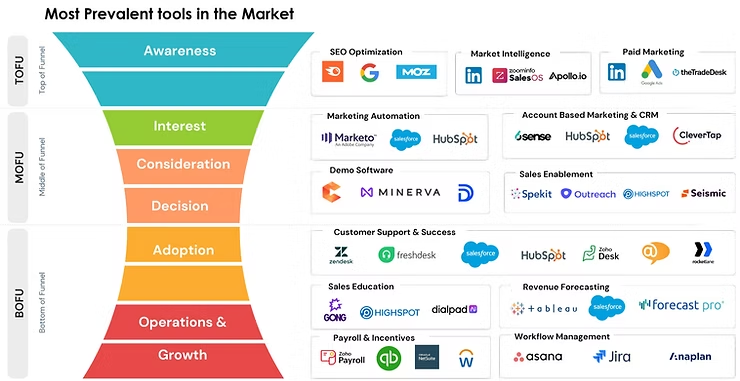
The average organization spends millions annually on technology—tools for productivity, collaboration, data management, and more. Yet, many of these tools overlap in functionality or are severely underutilized. The result? A bloated tech stack and wasted dollars that drain profitability.
The Hidden Costs of Corporate Tech Bloat
Studies show that the average company has over 200 software tools in its stack, and a significant portion of these tools remain underused or redundant. Gartner reports that companies often waste as much as 30% of their technology budget on tools they don’t need or don’t fully utilize.
This doesn’t just hurt the bottom line—it slows operations, creates inefficiencies, and hampers growth. Employees become overwhelmed navigating unnecessary systems, and businesses miss opportunities to streamline processes.
Why This Problem is So Hard to Solve
Unlike personal subscriptions, where you might only have to cancel a few overlapping services, corporate tech stacks are far more complex. Each tool has multiple stakeholders, licensing agreements, and integration challenges. Without clear ownership or accountability, identifying and reducing redundancies becomes a herculean task.
A Real-World Example: Company X's Turnaround
Take the example of a mid-sized SaaS company struggling with a sprawling tech stack. They were using three different project management tools, two overlapping CRMs, and redundant cloud storage platforms. By auditing their tech stack, they eliminated duplicative tools and consolidated workflows into a single platform, saving $250,000 annually. Beyond the savings, employee productivity improved because teams no longer had to juggle multiple systems.
The Solution: Tech Stack Optimization
At Solutioneers, we specialize in helping companies untangle their tech stacks. Our approach identifies overlapping tools, evaluates utilization, and aligns technology investments with your actual business needs. This process not only delivers immediate cost savings but also boosts efficiency and positions your company for sustainable growth.
Here’s what we focus on:
-
Redundancy Audits: Identifying tools with overlapping functionalities.
-
Utilization Analysis: Understanding which tools drive value and which don’t.
-
Strategic Consolidation: Streamlining systems to reduce complexity and cost.
-
Implementation Roadmap: Creating a plan to align your tech stack with business goals.
The Bottom Line
If you wouldn’t waste money on personal subscriptions you barely use, why tolerate it at the corporate level? Optimizing your tech stack is about more than just cutting costs—it’s about driving agility, efficiency, and growth.
Ready to see how much you can save? Let’s start the conversation. Contact us today to unlock the full potential of your tech investments.
StackIQ, our intelligence platform, helps companies find this waste. Learn more at stackiq.co.
Share this post