Margin and Software Spend
AI features and gross margin: what to measure before you set the price
AI features carry a cost every time they run, which seat pricing never had to cover. What to measure per feature, and how credits, caps and tiers change margin.
Jana Schuster · October 8, 2026 · 3 min read
Traditional software has a low marginal cost per user, so a flat seat price worked. AI features add a cost every time they run. A product leader we spoke with said that at a low flat monthly price, an AI feature would lose money on every use, and described comparing the cost of the AI version of a task with the human version every quarter. Another leader described a feature that makes many round trips to a language model per request, and noted that tokens are not free.
What to measure per AI feature
- Cost per action. Include model calls, retries and supporting infrastructure.
- Actions per customer per month. Use the distribution, not just the average. A few heavy users can set the margin.
- Share of customers who cost more to serve than they pay. This is the number that tells you whether the price is wrong.
- Gross margin by plan. Compare AI-inclusive tiers with those without AI.
- Cost trend. Model prices change often, so review the cost per action every quarter.
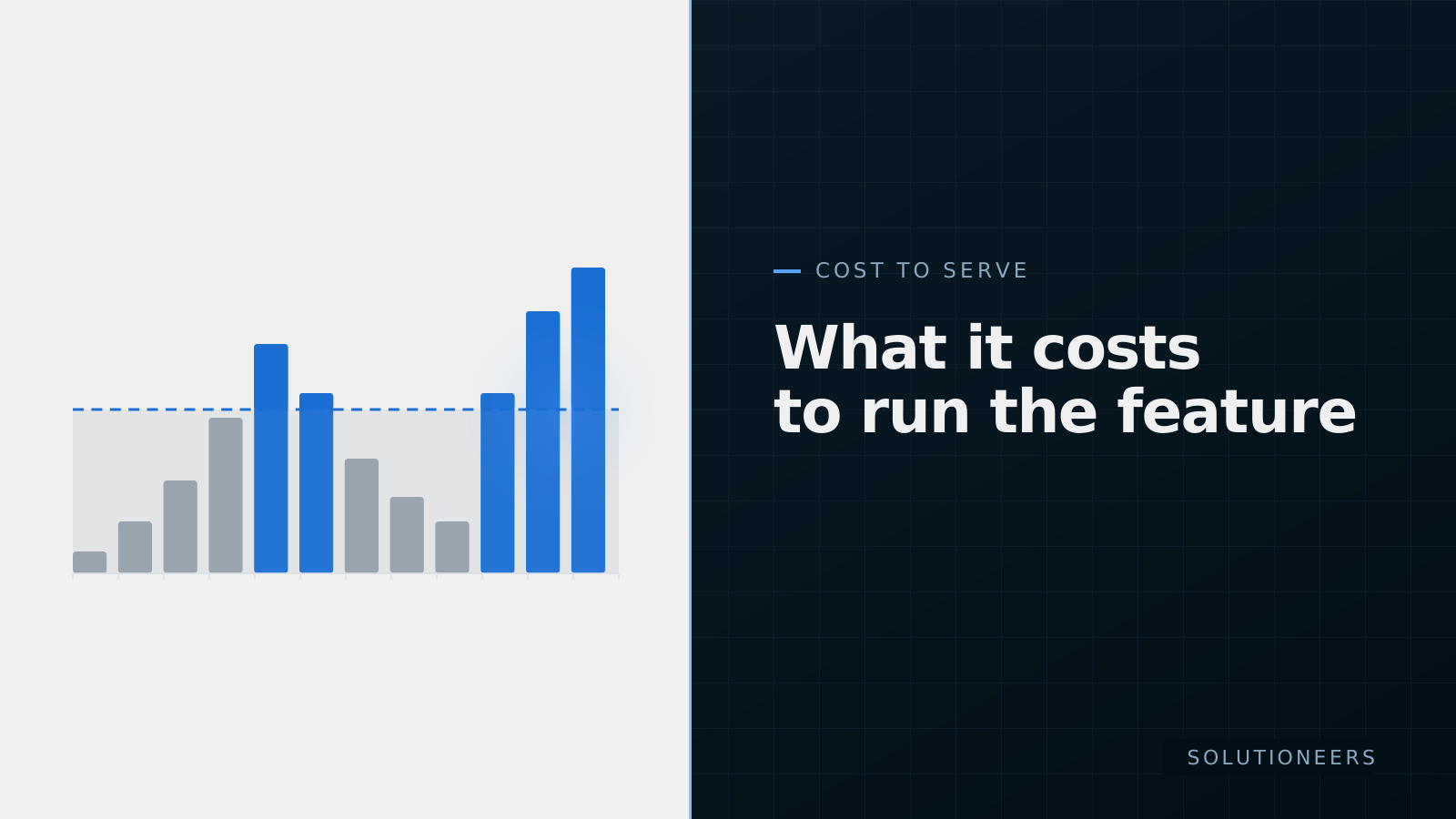
In text: D1: 40. D2: 95. D3: 170. D4: 240. D5: 300. D6: 265. D7: 210. D8: 180. D9: 430. D10: 560. Cost equals price.
How pricing responds
- Credits or allowances. Each plan includes a set number of actions, with overage priced above cost. Customers see the unit, and heavy users pay more.
- Caps or fair-use limits. These protect margin, and they can frustrate customers if limits are unclear.
- Tiering by model or capability. Charge more for features that use more expensive models.
- Minimum commitments. These protect a floor while usage grows.
None of these is correct on its own. The right choice depends on how much usage varies across your customers and whether customers can predict their own use.
What to do this quarter
- Calculate the cost to serve for your three most-used AI features.
- List the customers whose usage is above the cost-covering level and check how they are priced.
- Set a date to recheck costs, since a fixed price can become too high or too low as model prices change.
- Decide who owns this number. In many companies it sits between product, engineering and finance, with no single owner.
Getting to a defensible cost per action is where our margin optimization work starts.
Compare notes with us
We are talking with CEOs and finance leaders about how they price AI features and track their margin. If this is on your list, we would welcome 20 minutes to compare notes. Book a time or email jana@gosolutioneers.com.
Related: ACV compression; Why a pricing change takes months.
StackIQ, our intelligence platform, helps companies find this waste. Learn more at stackiq.co.
Share this post