Pricing and Monetization
ACV compression: when customers stay but pay less
Customers keep renewing, but each renewal is smaller as AI handles work that seats used to cover. How to measure ACV compression and the pricing options that respond to it.
Jana Schuster · October 1, 2026 · 3 min read
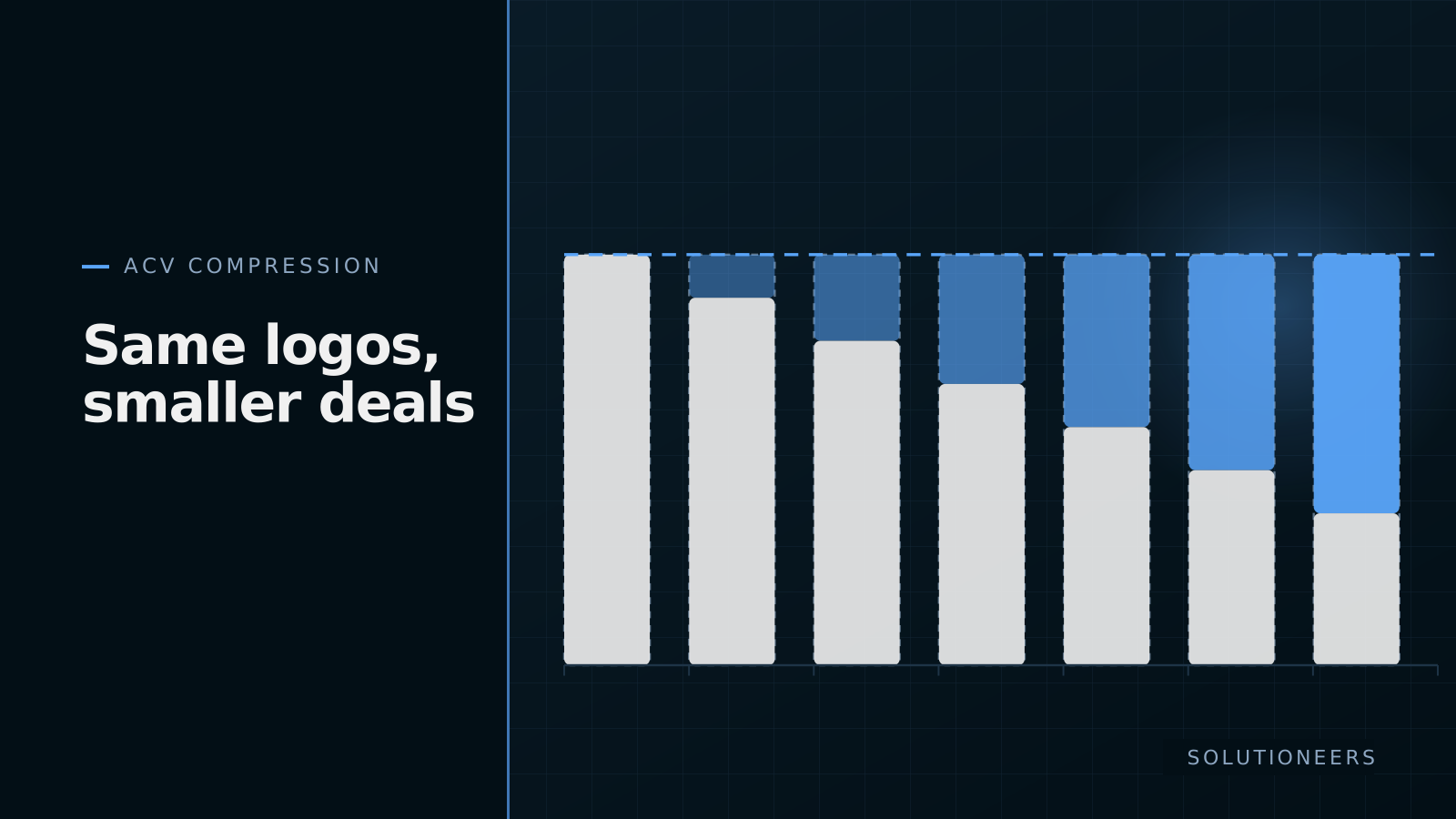
Many software companies are seeing a pattern that churn dashboards do not show. Customers renew, but each renewal is smaller. They buy fewer seats because AI handles work that people used to do, and because their own headcount is flat or shrinking. We call this ACV compression.
Why it is easy to miss
The arithmetic below is illustrative. A company has 200 customers at an average ACV of $100,000, which is $20 million in annual recurring revenue. If seats per customer fall 20% and the price per seat stays the same, ARR falls by $4 million without a single customer leaving. Logo retention stays at 100% while revenue retention drops by 20 points. Any forecast built only on renewal rates will overstate next year.
In text: Current ARR: $20M. After a 20% seat drop: $16M. Difference: $4M, no customers lost.
How to tell whether it is happening to you
Four cuts of renewal data answer the question:
- Seat count at renewal compared with the prior term, by customer segment.
- Price per seat and discount depth at renewal.
- Usage per remaining seat. If seats fall while usage per seat rises, customers get the same or more value from fewer licenses.
- Whether customers who use your AI features pay more or less than those who do not.
If the third cut shows that pattern, the seat is no longer measuring value.
Responses and their trade-offs
- Add a usage or credit component next to a platform fee. Price follows value more closely, but revenue is harder to forecast.
- Raise the price per seat. This works only if the value per seat has risen, and it can speed up seat reduction.
- Bundle AI into a higher tier. It is simple to sell, but it hides the cost of serving AI features.
- Set minimum commitments. They protect a revenue floor, and some customers will resist them.
Each option depends on the same first decision: which unit rises when the customer gets more value? A usage metric also requires data you can measure reliably today.
What to do this quarter
- Pull the last eight quarters of renewals and calculate seat change and ACV change by cohort.
- Separate price effects from volume effects.
- List two or three candidate value metrics and check that each can be measured from data you already collect.
- Decide how existing customers will move to any new model. Our next post covers that step.
This is the work we do in a pricing and packaging engagement.
Compare notes with us
We are talking with CEOs and finance leaders about how they are handling ACV compression. If you are seeing it, we would welcome 20 minutes to compare notes. Book a time or email jana@gosolutioneers.com.
Related: Why a pricing change takes months; AI features and gross margin.
StackIQ, our intelligence platform, helps companies find this waste. Learn more at stackiq.co.
Share this post